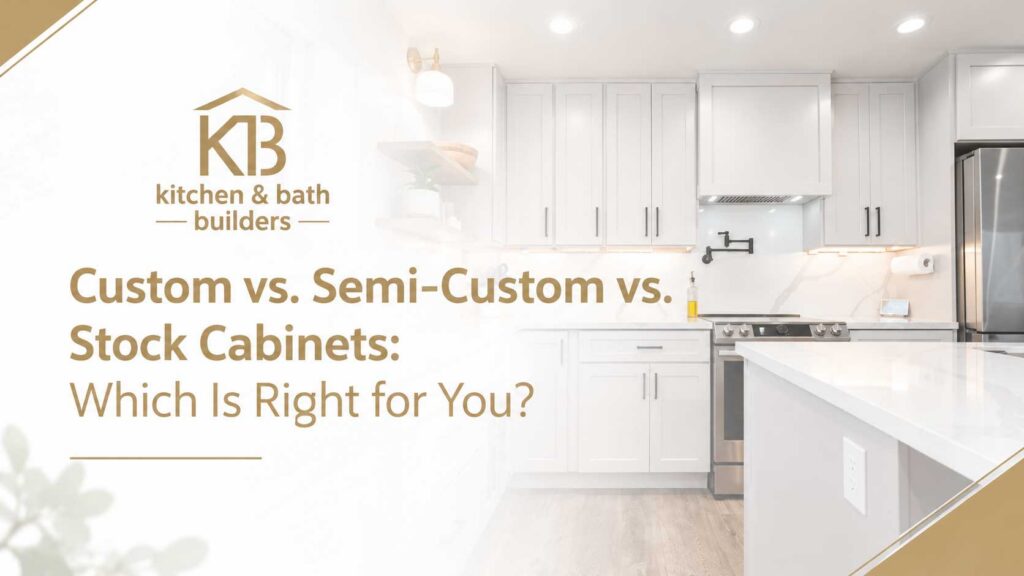
Custom vs. Semi-Custom vs. Stock Cabinets: Which Is Right for You?
Choosing cabinets is one of the most important decisions in a kitchen remodel. Cabinets affect how your kitchen looks, how efficiently you use the space, and how much you spend on the renovation. With stock, semi-custom, and custom options available, understanding the differences can help you choose the right fit for your home and budget. If you’re comparing custom vs. semi-custom cabinets, the best option depends on your kitchen layout, design preferences, storage needs, and project timeline. For homeowners planning a kitchen remodel in Federal Way, WA, understanding these differences can help you choose cabinetry that suits your home and budget. Understanding the Three Types of Kitchen Cabinets Stock, semi-custom, and custom cabinets differ in how they’re designed, manufactured, and adjusted to fit your kitchen. However, the exact features and available options vary by manufacturer. Feature Stock Cabinets Semi-Custom Cabinets Custom Cabinets Sizes Predetermined standard sizes Standard sizes with selected modifications Built to project-specific dimensions Design options More limited Wider selection of styles, finishes, and features Extensive design flexibility Layout flexibility Best for straightforward layouts Accommodates some nonstandard requirements Can address unique layouts and specific storage needs Budget Generally the most budget-friendly Midrange, depending on selections Generally the highest investment Lead time May be shorter if in stock Depends on the product line and modifications Depends on design, fabrication, and installation requirements These categories provide a general guide rather than a guarantee. Actual costs, availability, and lead times depend on the manufacturer, materials, design complexity, and contractor. 1. Stock Cabinets: A Practical Option for Standard Kitchens Stock cabinets are manufactured in predetermined sizes, styles, and finishes. Because they’re produced in standard configurations, they can be a practical choice for homeowners who want a straightforward cabinet solution without extensive customization. Benefits of Stock Cabinets What to Consider The main limitation is flexibility. Your kitchen must accommodate the sizes and configurations available. If cabinets don’t fit the space precisely, your design may require filler strips, trim, or other adjustments. Stock cabinets can work well in kitchens with standard layouts and straightforward storage needs. However, compare construction quality, hardware, finishes, and warranty coverage rather than assuming all stock cabinets are the same. 2. Semi-Custom Cabinets: More Flexibility Without a Fully Custom Design Semi-custom cabinets offer a middle ground between stock and custom cabinetry. They start with an established product line but may allow you to modify certain dimensions, finishes, door styles, storage features, and other details. The available modifications depend on the manufacturer and cabinet series. Benefits of Semi-Custom Cabinets What to Consider Semi-custom cabinets typically cost more than comparable stock options, especially when you select upgrades or dimensional changes. They also require careful planning because not every cabinet size or modification is available. For many homeowners, semi-custom cabinetry offers a useful balance between design flexibility and cost. It can be particularly appealing when standard cabinets almost fit the layout but a few adjustments would improve the kitchen’s appearance or functionality. Before committing, ask which modifications are included in the quote and which incur additional charges. 3. Custom Cabinets: Designed Around Your Kitchen Custom cabinets are designed and built to meet the specific requirements of your project. Rather than choosing only from predetermined sizes, you can work with a cabinet designer to plan dimensions, storage configurations, materials, finishes, and other details. This flexibility can be valuable when your kitchen has unusual dimensions, architectural features, or storage requirements that standard cabinet lines cannot easily accommodate. Benefits of Custom Cabinets What to Consider Custom cabinetry generally requires a larger budget and more coordination during the design and fabrication process. The timeline depends on the complexity of the design, material availability, production schedule, and installation requirements. It’s also important to remember that custom does not automatically mean higher quality. The materials, construction methods, hardware, finish, and workmanship all matter. Ask for detailed specifications and review the proposed design before approving the project. How to Compare Cabinet Quality When comparing stock vs. custom cabinets, don’t base your decision on the cabinet category alone. Two products at different price points can vary considerably in construction and durability. Consider these factors before choosing: Materials and construction: Ask what materials are used for the cabinet boxes, doors, drawer components, and shelves. Review the specifications rather than relying on general labels such as “premium.” Hardware and functionality: Hinges, drawer slides, and other moving components affect everyday use. Soft-close mechanisms and pull-out storage may be available as standard features or upgrades, depending on the product line. Finish and maintenance: Consider how the finish will hold up to everyday kitchen use and what cleaning or maintenance it requires. Warranty and certifications: Review the manufacturer’s warranty and any applicable product certifications. The Kitchen Cabinet Manufacturers Association (KCMA) offers a cabinet certification program with defined performance requirements. You can learn more through the KCMA Quality Cabinet Certification program and search its directory of certified companies. Which Cabinet Type Is Worth the Money? The right choice depends on your priorities, not simply on which option costs the most. Stock cabinets may be the best fit if your kitchen has a standard layout and your main priority is keeping costs manageable. Semi-custom cabinets may be worth the additional investment if you want more design choices or selected modifications without moving to a fully custom solution. Custom cabinets may make more sense when your layout, storage requirements, or design goals call for a more tailored approach. For homeowners planning a kitchen renovation in Federal Way, Washington, the best investment depends on the existing layout, desired level of customization, and overall remodeling budget. You can also combine approaches where appropriate. For example, standard cabinets may work well for most of the kitchen, while a custom cabinet or storage solution addresses a particularly challenging area. Before comparing quotes, make sure each proposal covers similar items, including cabinet materials, hardware, finishing, delivery, installation, and any required modifications. Ask about expected lead times and how changes to the design could affect the budget or schedule. If you’re preparing for a kitchen